Why the Airhead Tejo Is Worth the Upgrade: Comfort, Integration & Everyday Ease
When It Makes Sense to Upgrade From a Compact Composting Toilet
For many off-grid lifers, moving to a composting toilet is already a major step forward from traditional marine heads or black-water systems. But after living with a compact composting toilet for a while, the same limitations often appear regardless of brand or model.
Seat comfort. Daily usability. Servicing frequency. Integration with the space around it.
That’s exactly why we created the Airhead Tejo. It keeps the proven separation and composting performance that defines composting toilets, but delivers a significantly more comfortable, more integrated and more convenient experience for full-time living and premium installations.
So if you already use a compact composting toilet, when does upgrading to the Tejo actually make sense?
When It Makes Sense to Upgrade From a Compact Composting Toilet
Compact composting toilets are popular because they’re self-contained, flexible and easy to install in tight spaces. That’s true whether you’re using an Airhead Classic or another compact design. They work well in smaller boats, vans and simple cabins, especially where no holding tank exists.
But once installations become larger or usage becomes full-time, different priorities take over. Comfort becomes part of daily life rather than occasional use. Servicing intervals start to matter more. And if a remote holding tank already exists, manually emptying urine bottles can begin to feel unnecessary.
Upgrading to the Tejo typically makes sense when:
– you live aboard or off-grid full-time – the toilet is used daily by multiple people – a remote or black tank is already installed – interior integration and comfort matter more than compactness
In these environments, the Tejo removes several compromises that compact composting toilets inevitably carry, regardless of brand.
Household-Level Comfort That Compact Toilets Can't Match
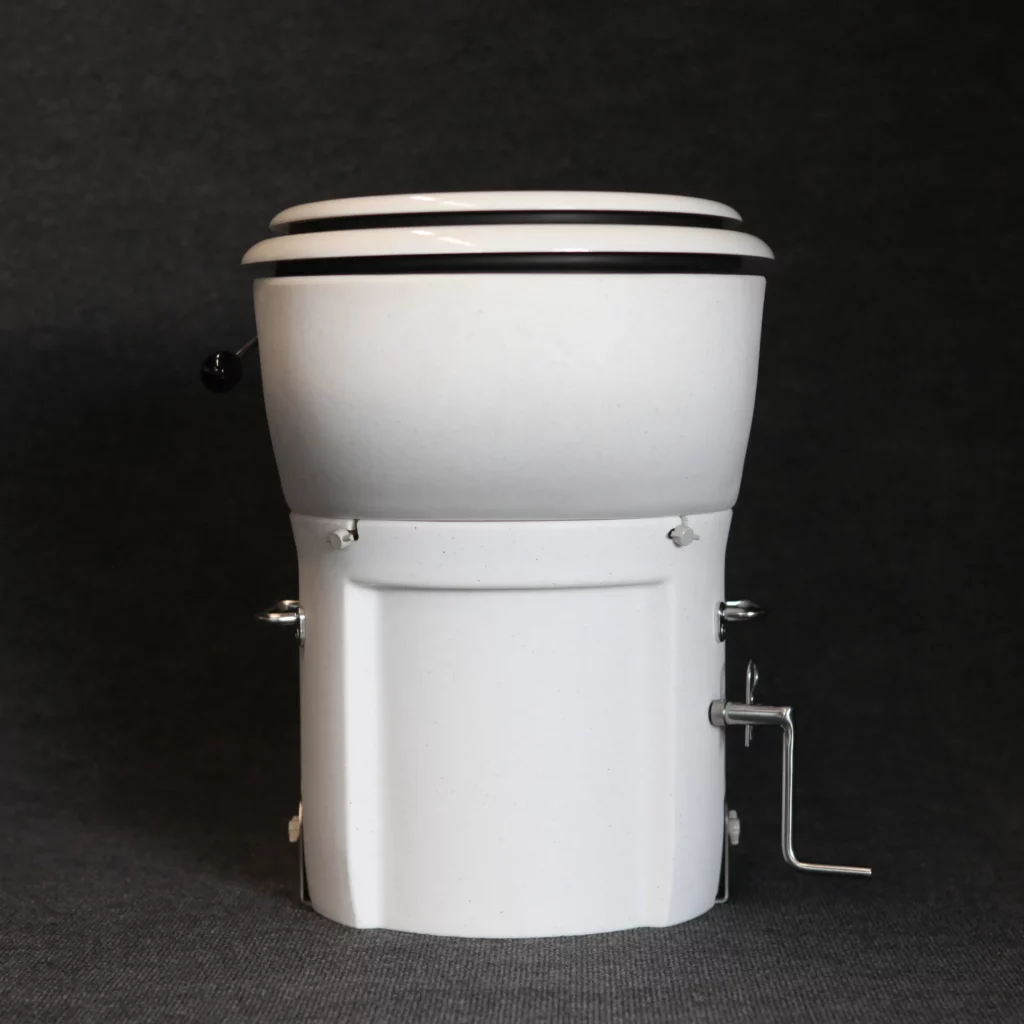
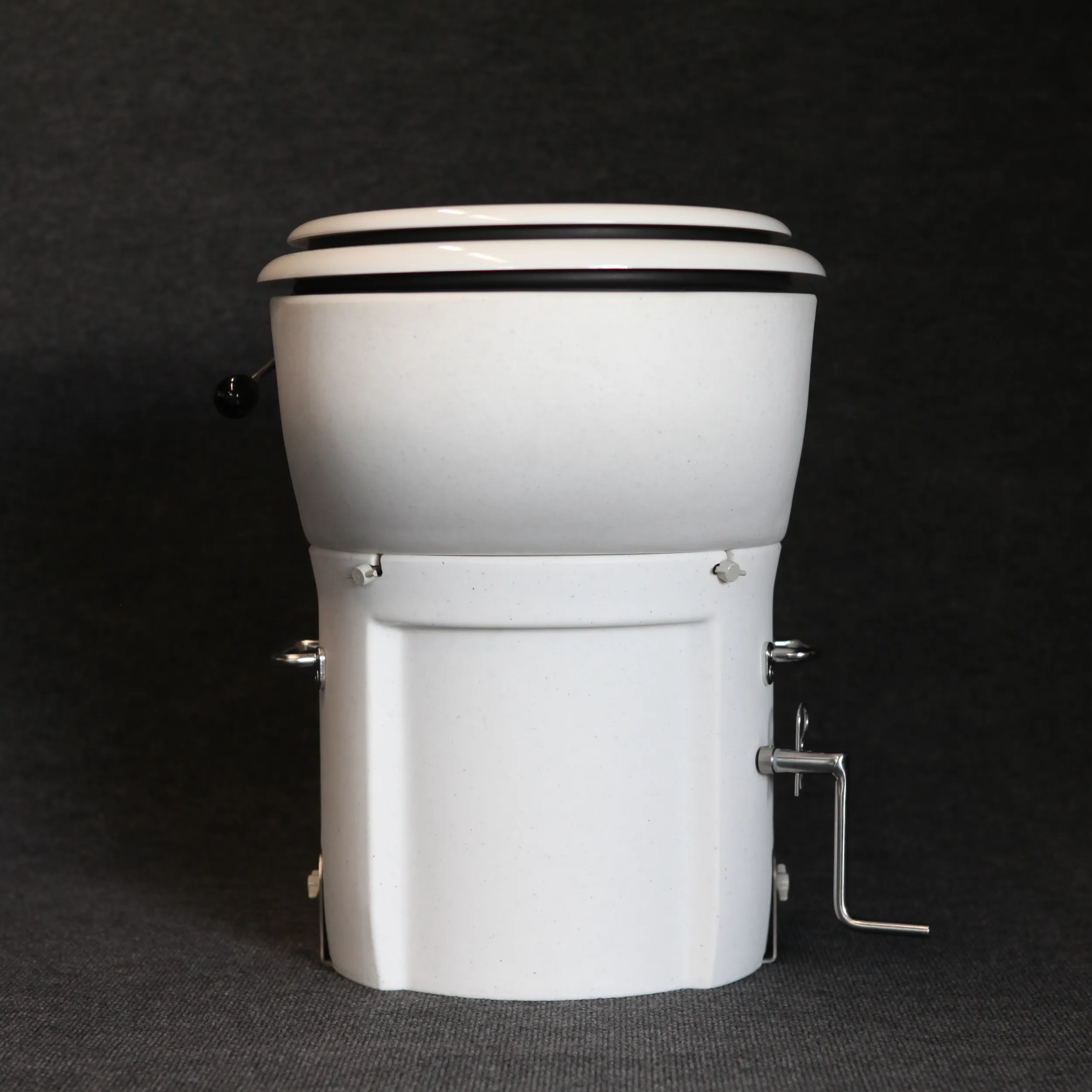
The most immediate difference with the Tejo is simply how normal it feels to use. The bowl size, seat height and proportions are closer to a residential toilet than any compact composting design. For occasional use this may seem minor, but in daily living it becomes a genuine quality-of-life improvement.
A larger seating surface creates a more natural sitting position and better stability, especially for full-time users or shared households. Over months and years of use, that comfort difference becomes obvious compared with smaller compact toilets.
Visually, the Tejo also integrates more naturally into modern interiors. It looks like a conventional toilet rather than specialist equipment. That matters in guest heads, family spaces and premium interiors where familiarity and aesthetics matter just as much as function.
Direct Tank Integration: A Major Upgrade in Daily Use
One of the biggest differences between the Tejo and compact composting toilets is how liquid waste is handled. Compact toilets collect urine in a removable bottle attached to the unit. That flexibility is valuable in small or portable setups, but it also creates daily handling tasks.
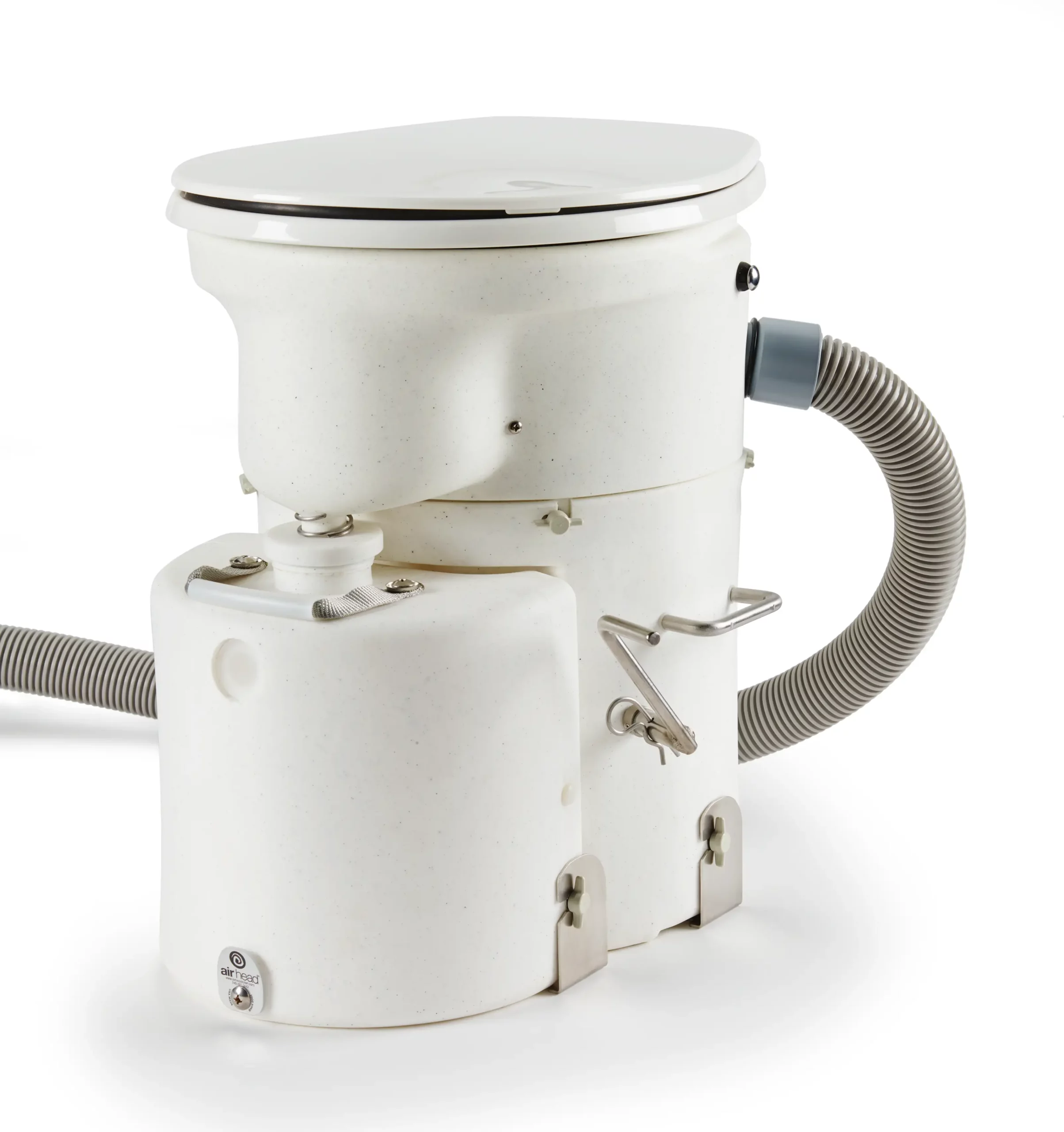
The Tejo eliminates the internal bottle entirely and diverts liquids directly to a remote or existing holding tank through a hose connection. In larger boats or off-grid homes that already have tanks installed, this changes the user experience completely.
Instead of:
removing and carrying containers
emptying bottles manually
managing disposal in cold or awkward environments
the Tejo operates like a household toilet for liquids while solids continue composting separately. For many full-time users, this single feature is the most meaningful upgrade over any compact composting toilet.
Longer Intervals for Solids
Compact composting toilets must balance size with capacity. Their solids chambers are necessarily smaller, which means more frequent servicing in multi-user or full-time environments.
The Tejo’s larger chamber allow longer intervals between emptying. In liveaboard or family use, this reduces maintenance frequency and improves day-to-day convenience without increasing the toilet footprint.
For extended cruising, remote cabins or shared installations, this capacity difference becomes increasingly valuable over time.
Minimal Accessories, Simple Installation
Despite its larger capacity and tank integration, the Tejo remains a very simple system to install and operate. Unlike many marine sanitation systems, there are no pumps, macerators or complex plumbing components required.
In most installations, only three supporting items are needed beyond the toilet:
ventilation hose
urine diversion hose to tank
peat moss or coco coir bricks
That simplicity is intentional. The Tejo is designed to integrate cleanly into existing boats and cabins without creating a complicated sanitation system.
Ventilation: The Primary Installation Component
All composting toilets rely on airflow to keep the solids chamber dry and odor-free. Because every installation layout differs, the only common variable is the length and routing of the vent line.
Many Tejo installs simply require additional vent hose to reach a suitable exit point such as a exterior wall. Longer vent runs are normal in boats and RVs and are easily accommodated.
Once installed, ventilation operates continuously and requires no user interaction.
Peat Moss or Coco Coir: The Only Ongoing Supply
Like all Airhead toilets, the Tejo uses peat moss or coco coir fibres in the solids chamber to maintain the correct carbon balance and moisture structure for composting. These natural materials keep waste dry, odor-free and easy to manage.
We supply compressed bricks that expand when hydrated and last for extended use:
Compared with water-based sanitation systems, this is effectively the only ongoing material required for operation.
Why the Airhead Classic Still Makes Sense for Many Owners
While the Tejo represents a clear upgrade in comfort and integration, compact composting toilets like the Airhead Classic remain the best solution in many installations.
The Classic continues to make sense when space is limited or flexibility is essential. Its removable urine bottle allows complete independence from fixed plumbing, making it ideal for small boats, vans and portable setups. It also offers more sizing and configuration options, allowing owners to choose smaller bowls or tanks to suit constrained layouts.
For owners who prioritise compactness, portability or custom sizing, the Classic remains the right choice. The Tejo is not a replacement for compact toilets. It is the next step when installations are larger, more permanent and comfort becomes the priority.
Final Verdict: A Category Upgrade in Comfort and Convenience
If you already use a compact composting toilet and want something that feels closer to a household bathroom experience, the Airhead Tejo delivers a meaningful step forward. The larger seat, integrated liquid diversion and higher solids capacity remove many of the compromises associated with compact designs across the market.
From an ownership perspective, the upgrade is straightforward. The Tejo requires minimal accessories, simple plumbing and only peat or coco coir for operation. Most installations involve little more than vent routing, tank connection and initial setup.
For boaters, liveaboards and off-grid homeowners with the space and infrastructure to support it, the Tejo isn’t just an upgrade from the Classic. It’s an upgrade from compact composting toilets altogether.
Why the Airhead Tejo Is Worth the Upgrade: Comfort, Integration & Everyday Ease
When It Makes Sense to Upgrade From a Compact Composting Toilet
For many off-grid lifers, moving to a composting toilet is already a major step forward from traditional marine heads or black-water systems. But after living with a compact composting toilet for a while, the same limitations often appear regardless of brand or model.
Seat comfort. Daily usability. Servicing frequency. Integration with the space around it.
That’s exactly why we created the Airhead Tejo. It keeps the proven separation and composting performance that defines composting toilets, but delivers a significantly more comfortable, more integrated and more convenient experience for full-time living and premium installations.
So if you already use a compact composting toilet, when does upgrading to the Tejo actually make sense?
When It Makes Sense to Upgrade From a Compact Composting Toilet
Compact composting toilets are popular because they’re self-contained, flexible and easy to install in tight spaces. That’s true whether you’re using an Airhead Classic or another compact design. They work well in smaller boats, vans and simple cabins, especially where no holding tank exists.
But once installations become larger or usage becomes full-time, different priorities take over. Comfort becomes part of daily life rather than occasional use. Servicing intervals start to matter more. And if a remote holding tank already exists, manually emptying urine bottles can begin to feel unnecessary.
Upgrading to the Tejo typically makes sense when:
– you live aboard or off-grid full-time – the toilet is used daily by multiple people – a remote or black tank is already installed – interior integration and comfort matter more than compactness
In these environments, the Tejo removes several compromises that compact composting toilets inevitably carry, regardless of brand.
Household-Level Comfort That Compact Toilets Can't Match
The most immediate difference with the Tejo is simply how normal it feels to use. The bowl size, seat height and proportions are closer to a residential toilet than any compact composting design. For occasional use this may seem minor, but in daily living it becomes a genuine quality-of-life improvement.
A larger seating surface creates a more natural sitting position and better stability, especially for full-time users or shared households. Over months and years of use, that comfort difference becomes obvious compared with smaller compact toilets.
Visually, the Tejo also integrates more naturally into modern interiors. It looks like a conventional toilet rather than specialist equipment. That matters in guest heads, family spaces and premium interiors where familiarity and aesthetics matter just as much as function.
Direct Tank Integration: A Major Upgrade in Daily Use
One of the biggest differences between the Tejo and compact composting toilets is how liquid waste is handled. Compact toilets collect urine in a removable bottle attached to the unit. That flexibility is valuable in small or portable setups, but it also creates daily handling tasks.
The Tejo eliminates the internal bottle entirely and diverts liquids directly to a remote or existing holding tank through a hose connection. In larger boats or off-grid homes that already have tanks installed, this changes the user experience completely.
Instead of:
removing and carrying containers
emptying bottles manually
managing disposal in cold or awkward environments
the Tejo operates like a household toilet for liquids while solids continue composting separately. For many full-time users, this single feature is the most meaningful upgrade over any compact composting toilet.
Longer Intervals for Solids
Compact composting toilets must balance size with capacity. Their solids chambers are necessarily smaller, which means more frequent servicing in multi-user or full-time environments.
The Tejo’s larger chamber allow longer intervals between emptying. In liveaboard or family use, this reduces maintenance frequency and improves day-to-day convenience without increasing the toilet footprint.
For extended cruising, remote cabins or shared installations, this capacity difference becomes increasingly valuable over time.
Minimal Accessories, Simple Installation
Despite its larger capacity and tank integration, the Tejo remains a very simple system to install and operate. Unlike many marine sanitation systems, there are no pumps, macerators or complex plumbing components required.
In most installations, only three supporting items are needed beyond the toilet:
ventilation hose
urine diversion hose to tank
peat moss or coco coir bricks
That simplicity is intentional. The Tejo is designed to integrate cleanly into existing boats and cabins without creating a complicated sanitation system.
Ventilation: The Primary Installation Component
All composting toilets rely on airflow to keep the solids chamber dry and odor-free. Because every installation layout differs, the only common variable is the length and routing of the vent line.
Many Tejo installs simply require additional vent hose to reach a suitable exit point such as a exterior wall. Longer vent runs are normal in boats and RVs and are easily accommodated.
Once installed, ventilation operates continuously and requires no user interaction.
Peat Moss or Coco Coir: The Only Ongoing Supply
Like all Airhead toilets, the Tejo uses peat moss or coco coir fibres in the solids chamber to maintain the correct carbon balance and moisture structure for composting. These natural materials keep waste dry, odor-free and easy to manage.
We supply compressed bricks that expand when hydrated and last for extended use:
Compared with water-based sanitation systems, this is effectively the only ongoing material required for operation.
Why the Airhead Classic Still Makes Sense for Many Owners
While the Tejo represents a clear upgrade in comfort and integration, compact composting toilets like the Airhead Classic remain the best solution in many installations.
The Classic continues to make sense when space is limited or flexibility is essential. Its removable urine bottle allows complete independence from fixed plumbing, making it ideal for small boats, vans and portable setups. It also offers more sizing and configuration options, allowing owners to choose smaller bowls or tanks to suit constrained layouts.
For owners who prioritise compactness, portability or custom sizing, the Classic remains the right choice. The Tejo is not a replacement for compact toilets. It is the next step when installations are larger, more permanent and comfort becomes the priority.
Final Verdict: A Category Upgrade in Comfort and Convenience
If you already use a compact composting toilet and want something that feels closer to a household bathroom experience, the Airhead Tejo delivers a meaningful step forward. The larger seat, integrated liquid diversion and higher solids capacity remove many of the compromises associated with compact designs across the market.
From an ownership perspective, the upgrade is straightforward. The Tejo requires minimal accessories, simple plumbing and only peat or coco coir for operation. Most installations involve little more than vent routing, tank connection and initial setup.
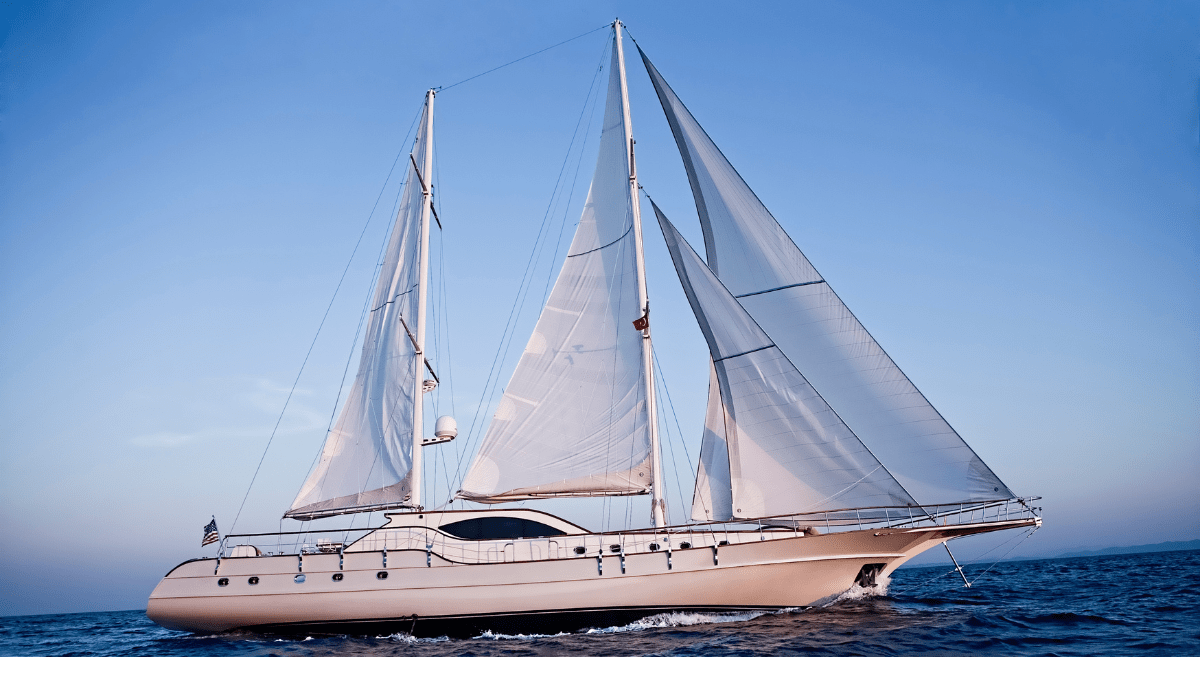
For boaters, liveaboards and off-grid homeowners with the space and infrastructure to support it, the Tejo isn’t just an upgrade from the Classic. It’s an upgrade from compact composting toilets altogether.